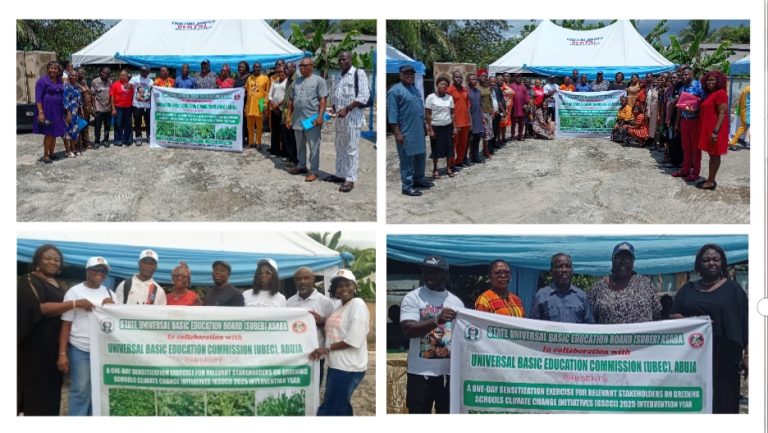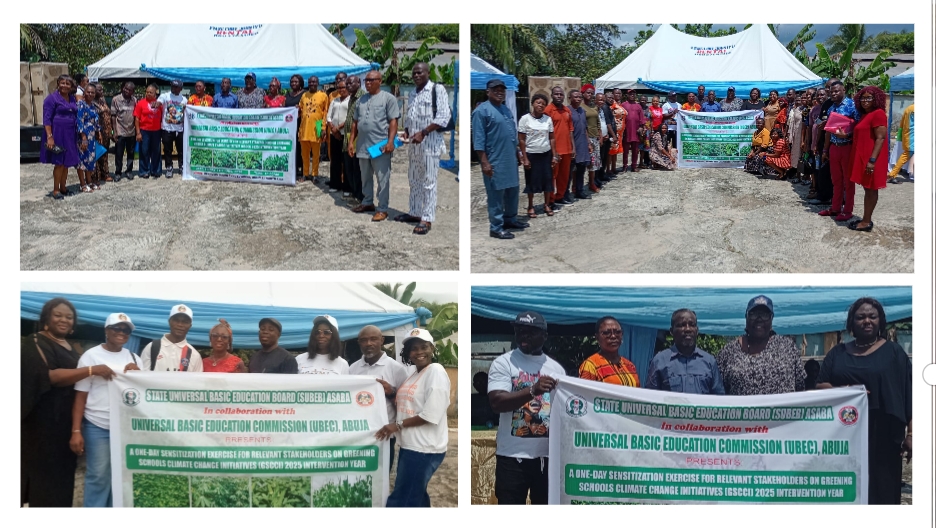
The Delta State Universal Basic Education Board, SUBEB, has charged teachers and headteachers to teach pupils agriculture early as a tool for food security, environmental sustainability, and self-reliance.
The call was made Friday, June 5, 2026, at a one-day sensitization on the Green School Climate Change Initiative, GSCCI, for the 2025 Intervention Year.
The programme was organized by SUBEB in collaboration with the Universal Basic Education Commission, UBEC, at Ophromo Farms, Evwreni, Ughelli North LGA.
Represented by the Second Member of the Board, Comrade Akpoghere Onome, SUBEB Executive Chairman Hon. Barr. Samuel Mariere urged participants to revive farming culture in schools and homes.
The Subeb Chairman said crops like tomatoes, ugu, waterleaf, scent leaf, and yam can be grown in school gardens to provide food, income, and practical learning for pupils.
“Agriculture remains one of the few occupations that can be combined with other professions, including teaching. It is a viable avenue for economic empowerment”, Mariere said.
He directed agricultural science teachers to use school farms for hands-on lessons and called for proper management and transparent use of proceeds from farm produce for the benefit of schools and communities.
Mariere commended Governor Rt. Hon. Sheriff Oborevwori for sustained investment in educational infrastructure, teacher training, and learning programmes, noting that the support has strengthened basic education in line with the administration’s MORE Agenda.
The SUBEB chairman recalled that agriculture was once a core school subject and advocated its revival as a practical tool for national food self-sufficiency.
He declared the programme open and urged participants to replicate the lessons in their schools.
UBEC State Coordinator, Mrs. Sharon Dafiluelo, said the commission restructured its agricultural education programme into a holistic initiative anchored on six pillars: greening schools, greening curricula, teacher training, greening communities, national greening competitions, and environmental clubs.
Dafiluelo explained that the new GSCCI shifts focus from Young Farmers’ Clubs to environmental clubs to equip pupils with skills to address climate change and drive sustainable development.
Dean of Education Secretaries in Delta, Chief Rose Esiso, urged education secretaries to monitor implementation closely and ensure pupils participate in planting, harvesting, processing, and marketing.
She cited examples of pupils in her LGA processing cassava into garri and selling it.
The Director of Academic Services, Mrs. Francisca Okpeh, and Acting Director of Teacher Professional Development, Mrs. Mary Eyangomiare, stressed that the programme is child-centred.
They warned teachers against treating school farms as personal ventures and insisted pupils must be involved in all farm activities to acquire entrepreneurial skills.
Resource person Dr. Babalola Adeniyi of Dennis Osadebay University, Anwai, lectured on climate-smart agriculture.
He said adopting innovative, environmentally friendly practices is critical to protect crops from extreme weather and build resilience against climate shocks.
The sensitization drew education secretaries, headteachers, LGEA GSCCI desk officers, SBMC chairmen, agricultural science teachers, SUBEB directors, and other stakeholders from 32 benefiting schools across Delta’s 25 LGAs.
About The Author